

The world of surface pattern design is evolving faster than ever, merging traditional influences with cutting‐edge technology. For fashion students, understanding these trends isn’t just about keeping up with what’s “in” – it’s about harnessing these ideas to develop a unique design voice and build a portfolio that stands out in today’s competitive industry.
Below, we explore the key trends shaping surface pattern design in 2025, with insights tailored to help you, as emerging fashion designers, translate these ideas into inspiring, market-ready collections.
Nostalgic Revivals and Heritage Inspirations
The 1970s Bohemian Renaissance
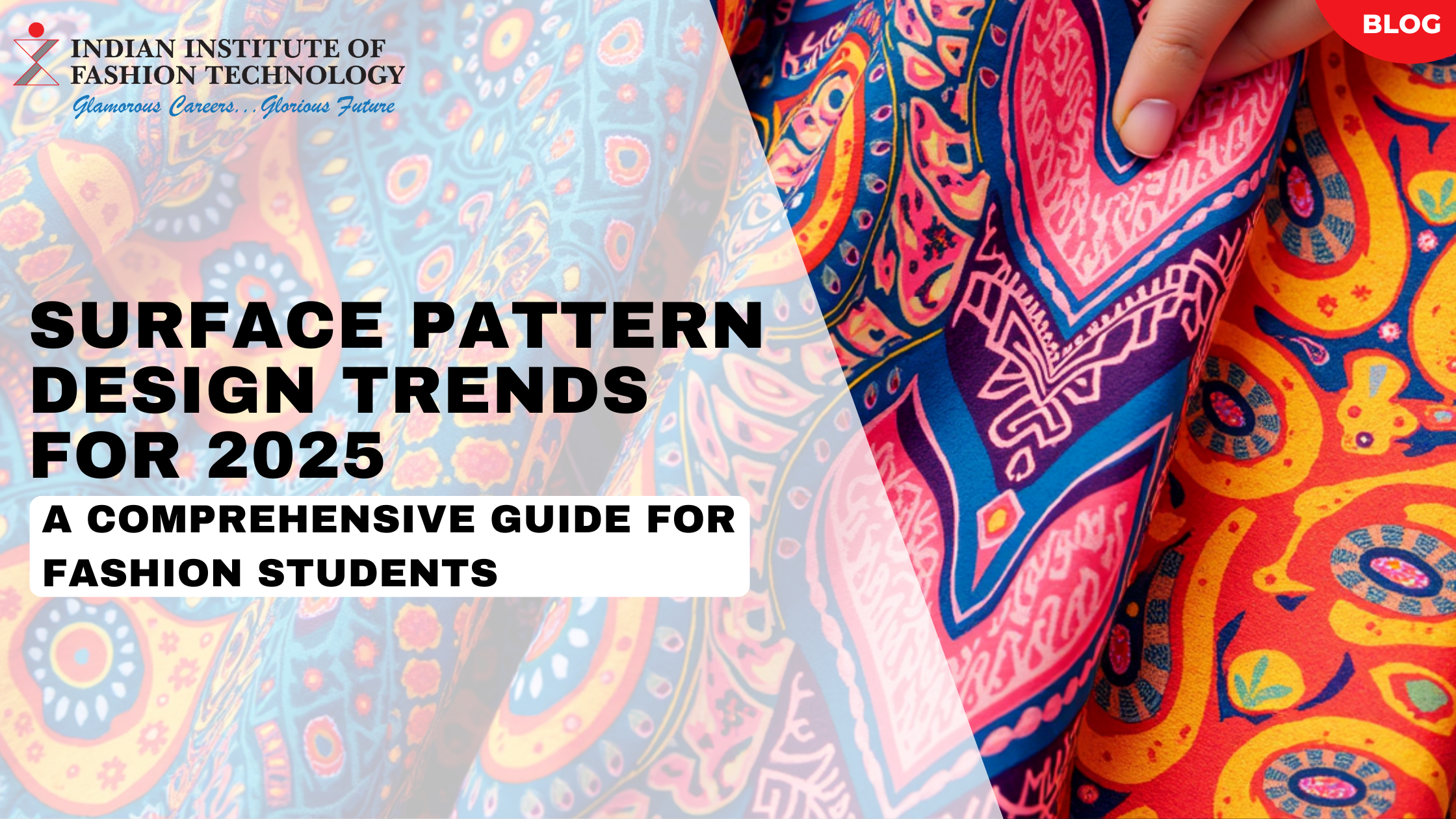
The free-spirited aesthetics of the 1970s are making a comeback, but with a modern twist. Designers are reinterpreting vintage motifs—like intricate paisleys, ethnic geometric prints, and warm, earthy tones—using digital techniques.
For fashion students, this is an invitation to revisit your old sketchbooks and vintage magazines. Experiment with deconstructing retro prints into simplified, abstract forms using digital tools, then integrate these reimagined motifs into contemporary garments.
This blend of analog charm and digital innovation can create truly standout designs.
Heritage Florals and Craftsmanship Reimagined
Heritage-inspired florals, once known as “Granny Thrift,” are evolving into sophisticated, artful expressions of traditional craft.
Think oversized damask prints, hand-stamped florals, and patterns inspired by family heirlooms. As a student, explore local craft traditions and family history for inspiration.
Use digital collage techniques to reinterpret vintage textiles—this approach not only celebrates cultural heritage but also develops a personal narrative in your design portfolio.
Nature, Technology, and Sustainable Innovation
Biomorphic Patterns and Eco-Friendly Materials
Sustainability is a core value in today’s design landscape. Biomorphic patterns—those inspired by organic forms such as lichen textures, cellular structures, and natural brushstrokes—are now being applied to eco-friendly fabrics.
Experiment with eco-dyes and sustainable materials in your projects. Integrating nature-inspired motifs can help you create collections that are both visually striking and environmentally responsible.
Digital Surrealism and AI Collaboration
Digital tools are revolutionizing the creative process. AI-powered platforms like Adobe Firefly and generative design software allow you to experiment with fractal geometries, glitch effects, and surreal pattern compositions.
Use these tools to generate complex, algorithmic repeats and then refine them by hand to maintain that essential human touch. This hybrid approach not only speeds up ideation but also ensures your work retains artistic authenticity.
Sustainability-Driven Design in Practice
Zero-Waste Pattern Systems
Innovative designers are now using tessellating geometric patterns to minimize fabric waste. In your coursework, explore software like CLO3D to simulate fabric layouts and experiment with zero-waste design techniques.
By learning these methods, you can contribute to a more sustainable fashion industry while adding a critical skill to your portfolio.
Upcycled Collage and Tactile Storytelling
Upcycling is more than a trend—it’s a creative strategy for repurposing textile waste into bold, story-driven designs. Incorporate elements of patchwork and collage to create dynamic, tactile patterns that tell a story.
This approach not only reduces waste but also infuses your designs with a sense of history and depth.
Color Trends: Balancing Innovation with Tradition
Digital Pastels and Earthy Contrasts
Color plays a pivotal role in surface pattern design. Digital pastels—think soft mints, gentle lavenders, and peachy hues—are being combined with earthy tones like terracotta, moss green, and sand.
These palettes evoke both modern digital aesthetics and timeless natural beauty. Experiment with gradient ombrés and layered textures to create designs that feel both futuristic and grounded.
Nature-Inspired and Nostalgic Brights
Alongside muted digital pastels, nostalgic bright hues reminiscent of Y2K and retro eras are making a strong comeback.
Use bold, saturated colors sparingly to highlight key design elements in your work. Balancing these with softer neutrals can create a harmonious look that is both eye-catching and wearable.
Essential Technological Tools for Aspiring Designers
Mastering Digital Design Software
For fashion students, proficiency in design software is essential. Adobe Illustrator and Photoshop remain industry standards for creating and refining patterns.
Additionally, tools like Procreate on the iPad offer a tactile, intuitive way to sketch and iterate designs. Embrace these platforms by enrolling in online courses or workshops.
Integrating 3D Modeling and AI Tools
Modern techniques such as 3D modeling and AI-driven design are increasingly used to preview patterns on digital garment renders.
Software like CLO3D and Browzwear allow you to see how your patterns interact with fabric drape and texture before production. Learning these tools can give you an edge in both creative exploration and practical application.
Ethical and Cultural Considerations in Design
Cultural Appreciation vs. Appropriation
In today’s globalized design world, it’s crucial to approach cultural motifs with respect. When drawing inspiration from indigenous patterns or traditional crafts, always credit the source and, when possible, collaborate directly with artisans.
This practice not only enriches your designs but also builds a foundation of ethical, responsible creativity.
Preserving the Human Touch in a Digital Age
While digital tools are transformative, they should enhance rather than replace your unique creative vision. Strive to maintain hand-drawn elements, imperfect textures, and tactile details in your work. This human touch can set your designs apart in an era increasingly dominated by machine precision.
Building Your Portfolio and Career Perspectives
From Classroom Projects to Professional Portfolios
Your portfolio is your most important asset. Document your process—from initial sketches and moodboards to final digital compositions—to show a complete narrative of your design evolution.
Include both experimental projects and polished collections that reflect the trends discussed here.
Networking and Global Collaboration
Take advantage of design competitions, internships, and collaborative projects both on and off campus. Join online communities (such as those found on platforms like Behance and Dribbble) to gain feedback and connect with industry professionals.
Participation in events like fashion weeks or university-sponsored workshops can further expand your network and open doors to exciting career opportunities.
Conclusion
2025 is poised to be a transformative year for surface pattern design, where tradition meets technology and sustainability intersects with creativity.
As fashion students, you have the unique opportunity to blend vintage inspirations with modern digital tools, creating designs that are both innovative and ethically grounded. Embrace these trends, experiment boldly, and build a portfolio that not only showcases your technical skills but also your unique artistic voice.
Stay curious, keep learning, and let your creativity lead you to new horizons in the world of fashion design.






Discussion