

Fee freshness note: This guide was reviewed on 2 June 2026. The figures below are planning bands drawn from current official fee pages published by Indian institutions and course providers. They are not a universal market average and they are not an IIFT Bangalore fee quote. Always request the current official fee structure, inclusions and instalment terms before enrolling.
Interior design course fees in India can look confusing because the same search can lead to a three- or four-year degree, a one-year diploma, a short certificate course or an online learning option. The headline number is only the beginning. A realistic budget also considers materials, printing, model-making supplies, software, laptop requirements, workshops, site visits, examinations and, for some students, travel or accommodation.
This guide separates those costs so that you can compare programmes sensibly. It also explains why the cheapest-looking course is not automatically the most affordable choice once the full learning experience is considered.
Interior design course fees in India: quick comparison
The most useful way to compare interior designing course fees is by pathway. Current official fee pages reviewed for this article show the following planning bands:
| Pathway | Typical duration | Current published planning examples | Best used for |
|---|---|---|---|
| Degree | 3 to 4 years | A current BSc example is around ₹1.5 lakh per year plus university charges. Current four-year design-degree examples run from about ₹8.9 lakh to ₹16 lakh total before some additional charges. | Students seeking a broad, multi-year foundation with sustained studio and portfolio development. |
| Diploma | 6 months to 1 year, depending on the programme | Current one-year diploma examples range from about ₹59,000 plus GST to ₹1.77 lakh, with some exam or resource costs listed separately. | Students looking for a focused learning route in a shorter period. |
| Certificate or short course | A few months | Reviewed current examples include promotional pricing around ₹37,999 and a four-month structured online option at ₹70,000 plus GST. Course depth varies. | Learners exploring a specific skill set or testing their interest before a longer commitment. |
| Online diploma or structured online programme | Varies by format | One current one-year online diploma example is ₹1.6 lakh. Shorter online options can cost less, but delivery and mentoring differ. | Students who need more flexibility and want to reduce commuting or relocation costs. |
These are not fixed prices for every college or course. They are a practical starting point for building your shortlist. If you are comparing options at IIFT Bangalore, use the interior design course overview to identify the pathway first, then request the current official fee structure from admissions.
Why do interior design course fees vary so much?
Two courses with similar names may offer very different learning experiences. Before comparing the amount, compare what the programme is actually designed to do.
1. Qualification and duration
A multi-year degree generally includes a wider academic and practical foundation. A diploma is usually more concentrated. A certificate course may focus on a narrower set of skills or act as an entry point. Duration changes the number of teaching hours, projects, assessments and portfolio opportunities, which naturally affects the fee.
2. Studio learning and project feedback
Interior design is not learned through theory alone. Students benefit from structured assignments, critique, revisions, drawings, space-planning exercises and portfolio development. When reviewing interior design courses and fees, ask how much guided project work is included and how feedback is delivered.
3. Classroom, hybrid or online delivery
Online learning can reduce commuting and relocation expenses, but it is not automatically the cheapest format. A live, mentored online programme with project feedback can cost more than a self-paced introductory course. Compare the format, contact hours, mentoring, recordings, assessments and student support before comparing prices.
4. Materials, software and facilities
Some programmes include selected learning resources while others charge separately. Ask whether the fee covers studio materials, printing, workshops, lab access or software guidance. Software access may also depend on your eligibility. For example, some vendors provide education plans subject to their own terms; always verify current eligibility on an official page such as the education software overview.
5. Location and student living costs
Interior design course fees in Bangalore are only one part of the calculation for a student relocating to the city. Travel, accommodation, food and daily commuting can materially change the total education cost. A nearby classroom programme or a flexible online option may produce a different budget even when tuition is similar.
Tuition fee versus total education cost
A reliable budget separates the advertised fee from the complete cost of learning. This matters especially in a practical design discipline, where your work develops through repeated project cycles.
| Cost area | What to ask before paying |
|---|---|
| Tuition | Is the amount for one semester, one year or the complete programme? Does it include GST where applicable? |
| Admission, examination or university charges | Are there one-time charges or recurring examination fees outside the advertised tuition? |
| Materials and model-making | Will you need to purchase boards, paper, samples, cutting tools, adhesives or project-specific supplies? |
| Printing and portfolio production | Are drawings, presentation boards, physical models or final portfolio outputs printed at your cost? |
| Laptop and software | What device specifications are recommended? Are software licences, lab access or education plans included? |
| Workshops and site visits | Are visits, guest sessions, special workshops or travel costs included? |
| Living costs | If you are relocating, what will accommodation, food and local commuting add each month? |
When asking an admissions team for a fee structure, request a written breakdown. A single headline figure is not enough to compare value. You want to know what is included, what is optional and what may become essential during the course.
Interior design degree fees in India
A degree route usually suits students who want a broader foundation and enough time to build a substantial body of work. Depending on the institution and programme design, students may study subjects such as drawing, visual communication, materials, space planning, furniture, lighting, building services, digital tools and portfolio development.
Current official examples reviewed on 2 June 2026 show why it is better to use a planning range than a single figure. A current BSc interior-design example is around ₹1.5 lakh per year plus university charges. Current four-year design-degree examples run from roughly ₹8.9 lakh to ₹16 lakh in total before some separate charges.
That difference does not mean one number is correct and the other is wrong. The programmes may differ in duration, qualification, inclusions, facilities and delivery. If you are exploring a three-year route, read the IIFT Bangalore page for the BSc in Interior Design and Decoration and ask admissions for the current official fee schedule.
Questions to ask when comparing degree fees
- Is the published amount annual, semester-wise or for the complete programme?
- Are university, examination or registration charges separate?
- How many studio projects and portfolio reviews are included?
- What materials and software will I need each year?
- Does the programme include site visits, workshops or practical assignments?
- What are the instalment and refund terms?
Diploma in interior design fees
A diploma can be a practical option for students or working learners who want a shorter route. Diploma programmes vary: some introduce the field, while others include a more intensive mix of drawing, planning, materials, presentation and software-oriented learning.
For one-year diploma pathways, current official examples reviewed for this guide range from about ₹59,000 plus GST to ₹1.77 lakh, with some exam or resource charges disclosed separately. Use that as a budgeting band, not a promise. The most important comparison is the syllabus and the amount of guided work you will complete during the year.
Students considering a focused classroom option can review the IIFT Bangalore one-year diploma in interior designing. Ask for the latest fee structure and confirm what is included before making a decision.
Is a diploma cheaper than a degree?
In total, a diploma often costs less because it is shorter. But cost per month is not the only measure of value. A degree gives you more time for breadth, academic development and portfolio growth. A diploma may suit a student who wants a focused timeline. Choose based on the outcome you need, not only the lowest headline amount.
Certificate and short-term interior design course costs
Short courses can help you explore a specific skill set, build confidence or understand whether you enjoy the work before committing to a longer pathway. Current official pages reviewed for this guide include a promotional certificate price around ₹37,999 and a four-month structured online option at ₹70,000 plus GST.
Discounts can change quickly, and short-course depth varies widely. Check whether the course is a compact introduction, a specialised module or a structured programme with mentoring and assignments. A lower amount may be appropriate for your goal, but it should not be compared directly with a multi-year degree as if both products were identical.
Online interior design course fees
Online learning is attractive for students who need flexibility, live outside a training location or want to reduce commuting and relocation costs. It can also work well for working learners who need to schedule study time around other commitments.
There is no single online fee. A self-paced introductory course, a live certificate programme and an online diploma are different formats. One current one-year online diploma example reviewed on 2 June 2026 is ₹1.6 lakh. Shorter structured online options can cost less.
When evaluating online interior design course fees, ask:
- Are classes live, recorded or both?
- How often will faculty review my work?
- Are projects assessed with actionable feedback?
- Will I learn drawing, planning and presentation processes alongside digital tools?
- What software or device setup will I need?
- Will the programme help me organise a portfolio?
IIFT Bangalore also lists a six-month online interior designing and decoration course. Request the current official fee and delivery details if flexibility is a priority.
How to compare degree, diploma and online costs
The right comparison is not simply expensive versus affordable. Start with the outcome you want, then assess the complete cost of reaching it.
| If your priority is… | Explore first | Then verify |
|---|---|---|
| A broad foundation after Class 12 | A degree pathway | Eligibility, multi-year syllabus, annual fee changes, university charges and portfolio development. |
| A focused learning route in a shorter timeline | A diploma pathway | Project depth, studio hours, software exposure, materials and total one-year cost. |
| Flexible learning without daily travel | An online pathway | Live mentoring, recordings, feedback, device needs and practical assignments. |
| Testing your interest or learning a specific skill | A certificate or short course | Scope, duration, mentor access and whether the course supports your next step. |
If you are deciding after school, the guide to interior design courses after 12th in India can help you compare the available pathways before you request fee details.
Hidden costs students often overlook
Interior design involves making, presenting and revising. Even when the course fee is clear, students may overlook smaller recurring expenses that add up across projects.
Materials and model-making supplies
Depending on the assignment, you may use paper, card, sample materials, cutting tools, adhesives and presentation supplies. Ask how frequently physical models are expected and whether any starter kit is included.
Printing, drawings and portfolio outputs
Presentation boards, drawings and portfolio work may require printing. Digital portfolios reduce some costs, but a programme may still expect physical submissions for selected projects.
Laptop, storage and software
Your learning may involve digital drawing, presentation, modelling or documentation tools. Device needs depend on the syllabus. Before purchasing a laptop, ask for recommended specifications and read the guide to software for interior design students.
Travel, visits and living expenses
Site visits and field exposure can be useful parts of design learning. If you relocate for a course, compare your monthly living budget with the cost of a nearby or online format. A modest difference in tuition can be outweighed by accommodation and travel.
Are interior design course fees worth paying in 2026?
The answer depends on what the course helps you learn and produce. A useful programme should help you move beyond inspiration boards into structured thinking: understanding a brief, measuring and planning a space, selecting materials, communicating ideas, revising a concept and presenting your work clearly.
Digital tools are increasingly important, and AI-assisted workflows can support early research, moodboard exploration and rapid concept iterations. They do not replace judgement, measurements, practical constraints or the ability to explain a design decision. A strong course should help you use tools thoughtfully while building fundamentals.
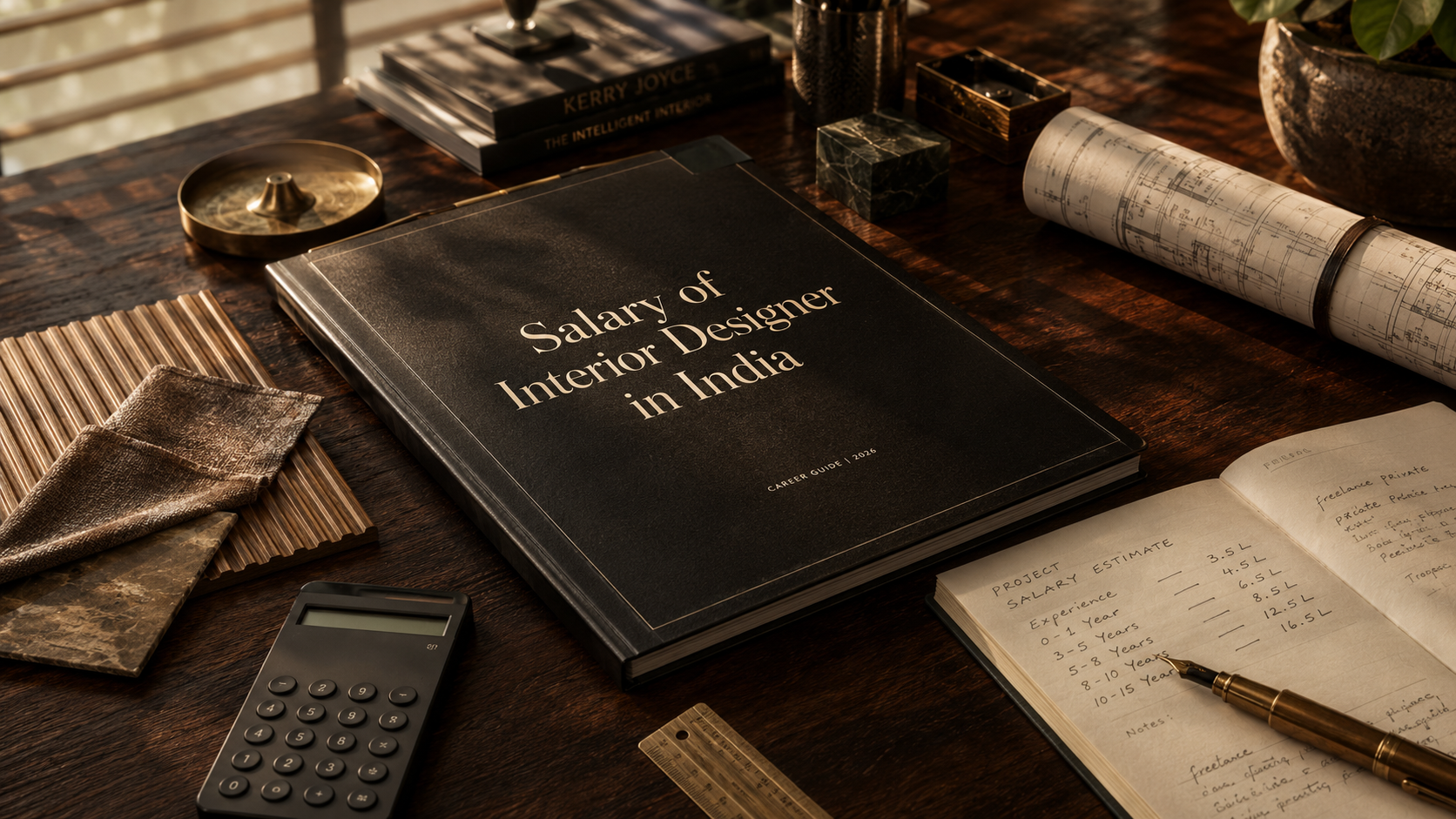
Before enrolling, ask to understand the syllabus, project work, feedback process and portfolio expectations. Also explore the scope of interior designing in India and the guide to the salary of an interior designer in India so that your fee decision sits within a realistic career plan.
How to choose an interior design course within your budget
- Choose the pathway first. Decide whether you need a degree, diploma, certificate or online format based on your starting point and goals.
- Request a written fee breakdown. Ask for tuition, GST where applicable, admission charges, examinations, materials, instalments and refund terms.
- Estimate the complete cost. Add device, software, printing, materials, travel and living expenses where relevant.
- Review learning depth. Compare projects, mentor feedback, studio practice, software exposure and portfolio development.
- Check practical fit. Consider your weekly schedule, commute, available study time and whether online flexibility is important.
- Ask questions before paying. Clarify inclusions in writing so that your final decision is based on the actual programme, not an assumption.
Exploring interior design courses at IIFT Bangalore
IIFT Bangalore lists multiple interior-design learning pathways, including a BSc route, diploma options and an online course. Start with the interior design course overview, then review the programme page that matches your goals.
Because fee structures can change, this article does not publish an IIFT-specific amount. Use the admissions page or contact IIFT Bangalore to request the current official fee structure, instalment options, included resources and any additional charges.
Frequently asked questions
What is the average interior design course fee in India?
There is no single honest average because course length, qualification, delivery mode and included resources vary widely. For planning, compare the relevant pathway: degree, diploma, certificate or online. Current official fee pages reviewed on 2 June 2026 show that degree programmes can run from about ₹1.5 lakh per year for a BSc example to roughly ₹8.9 lakh to ₹16 lakh total for four-year design-degree examples, while one-year diploma examples range from about ₹59,000 plus GST to ₹1.77 lakh before some additional charges.
Are online interior design courses always cheaper than classroom courses?
Not always. Online learning can reduce commuting or relocation costs, but fees still depend on duration, mentoring, live sessions, project feedback and the qualification offered. A current one-year online diploma example reviewed for this guide is ₹1.6 lakh, while shorter structured online options can cost less.
What extra costs should I plan for beyond tuition?
Ask whether the published fee includes materials, model-making supplies, printing, software, a suitable laptop, workshops, site visits, portfolio production, examination fees, university charges, travel and accommodation. These items can change the total education cost materially.
Is a degree or diploma better for interior design?
A degree usually offers a broader multi-year foundation and more time for studio projects. A diploma can be a more focused route for students who want a shorter timeline. The better choice depends on your starting point, learning goals, available time and budget.
How much does a one-year interior design diploma cost in India?
Current official examples reviewed on 2 June 2026 range from about ₹59,000 plus GST to ₹1.77 lakh, with some examination or resource charges listed separately. Treat that as a planning band and request the current official fee structure before enrolling.
Can I study interior design after Class 12?
Yes. Depending on eligibility and your goals, you can explore degree, diploma and certificate pathways after Class 12. Compare the syllabus, project work, portfolio development, practical exposure and total cost before deciding.
How can I evaluate whether an interior design course is worth the fee?
Look beyond the headline tuition amount. Review the syllabus, studio and project work, faculty guidance, software exposure, portfolio development, practical learning, student support, fee inclusions and the questions you can ask admissions before paying.
How can I get the current IIFT Bangalore interior design fee structure?
Use the IIFT Bangalore admissions or contact page to request the current official fee structure for the programme you are considering. Ask for tuition, instalment options, included resources and any additional charges in writing.
Conclusion
Interior design course fees in India make more sense when you compare like with like. Start with the pathway, use current official figures as planning references, add the costs beyond tuition and then assess the learning experience. The goal is not to choose the lowest visible number. It is to understand the complete investment and choose a course that fits your budget, schedule and learning goals.



Discussion