

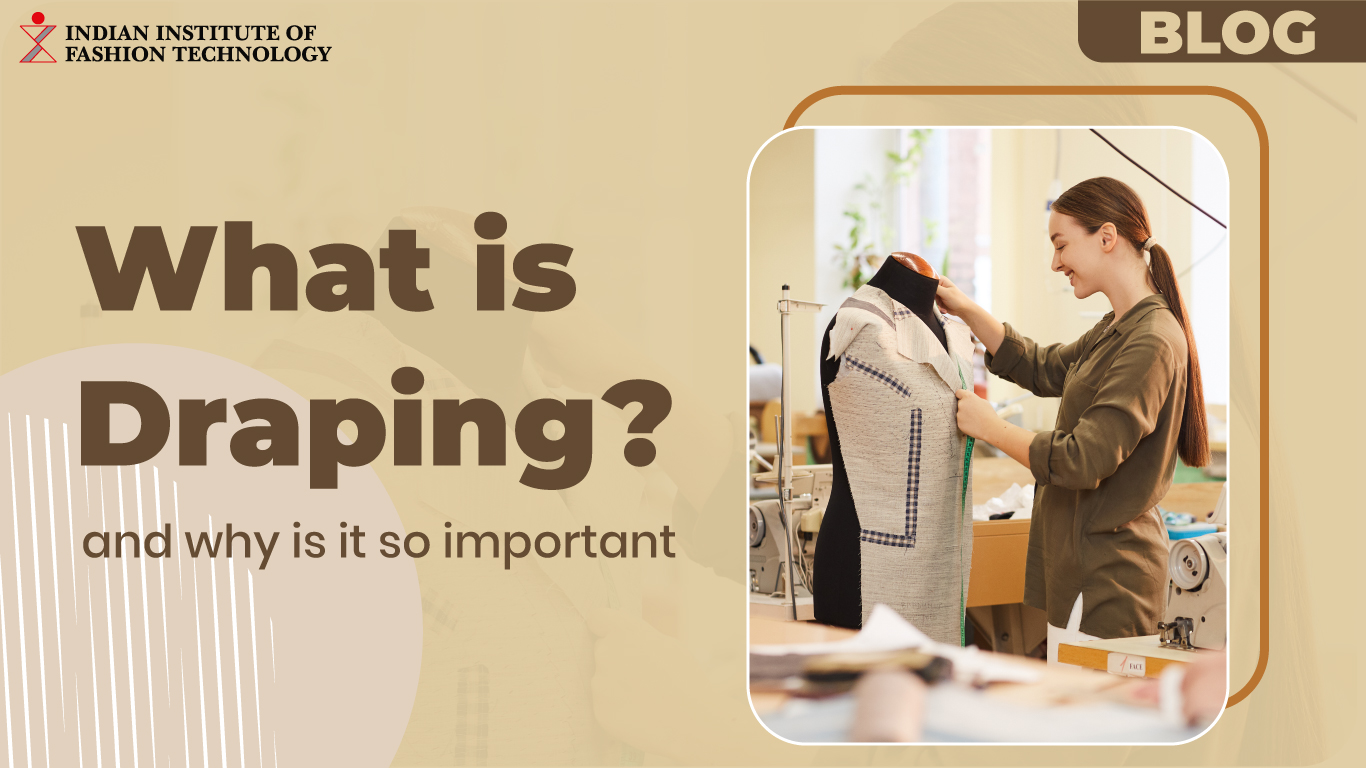
Have you ever wondered how flowing gowns or impeccably tailored jackets come to life in the hands of a designer? Often, it begins with draping: the art of manipulating fabric directly on a dress form to create a garment’s silhouette and fit. This foundational skill allows designers to visualize designs in three dimensions, bringing concepts to life with an unparalleled understanding of fabric behavior.
This comprehensive guide delves into the world of draping, exploring its rich history, essential draping techniques in fashion design, enduring importance in modern fashion, and its exciting evolution in the digital age.
What is Draping? A Foundational Skill in Fashion Design
Draping is the process of creating a garment prototype by positioning, pinning, and molding fabric onto a dress form (a three-dimensional body replica). Unlike flat pattern making, which involves drafting patterns on a two-dimensional surface, draping offers immediate visual feedback on how a design will look and flow on the body. It allows designers to experiment with volume, texture, and movement in real time. The crucial difference in draping vs pattern making lies in this direct, tactile interaction with the form.
The primary material used for draping is usually a plain, inexpensive fabric like muslin or calico. This allows for extensive experimentation without wasting expensive fashion fabrics. The dress form, designed to represent standard human proportions, acts as a living canvas. This hands-on method is crucial for understanding garment construction and developing an intuitive sense of how fabric translates into form. To learn more about the broader scope of fashion creation, explore What is fashion designing? How to become a fashion designer?
A Brief History of Draping: From Togas to Haute Couture
The practice of draping is ancient, with roots in civilizations that used unstitched lengths of fabric wrapped around the body.
- Ancient Origins: The elegant folds of Greek togas and Roman tunics are early examples of draped garments, showcasing a sophisticated understanding of how fabric could be manipulated to create graceful silhouettes.
- Early Couture: Draping remained a key technique for custom-made clothing through centuries. However, it gained significant prominence in the early 20th century with visionary designers like Madeleine Vionnet and Madame Grès. Vionnet, known as the “Queen of the Bias Cut,” revolutionized women’s fashion by shunning corsets and creating fluid, body-skimming gowns through intricate draping directly on miniature dress forms. Madame Grès became famous for her Grecian-inspired, meticulously pleated and draped gowns that wrapped and flowed around the body like liquid sculpture. The Fashion Institute of Technology (FIT) highlights these historical contributions in its study of draping fundamentals.
- Golden Age of Haute Couture: Draping continued to be indispensable during the mid-20th century’s haute couture era, allowing designers like Christian Dior to perfect iconic silhouettes that sculpted the female form.
This rich history underscores draping’s enduring legacy as a technique that merges artistic vision with technical precision.
Key Draping Techniques and Concepts
Draping involves a variety of draping techniques in fashion design that allow designers to create diverse garment styles:
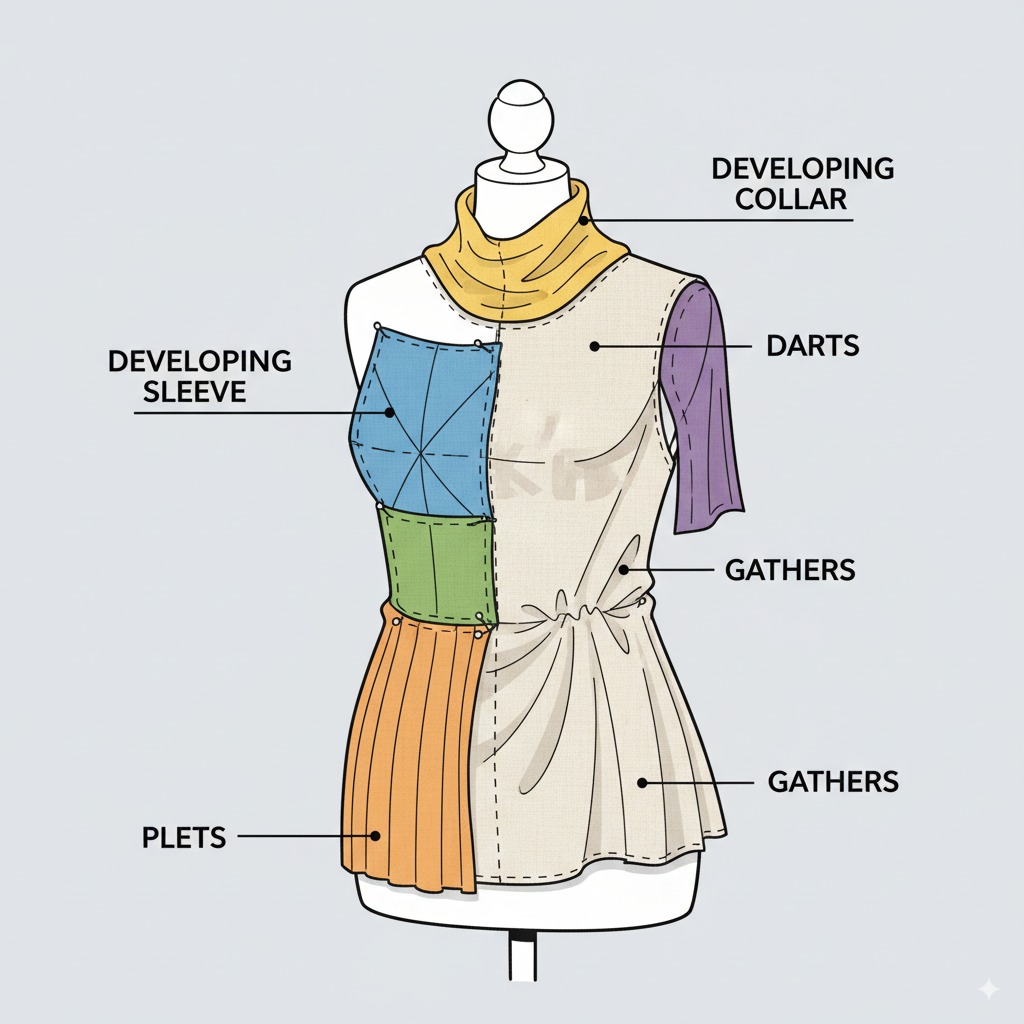
- Dart Manipulation: Darts are fundamental for shaping fabric to the three-dimensional curves of the body. Draping allows designers to intuitively locate and manipulate dart positions, converting them into style lines, pleats, or gathers.
- Adding Fullness: Techniques like gathers, pleats, and tucks are used to control fabric volume and create specific aesthetic effects. Draping helps designers visualize how these elements will cascade and flow on the body, influencing movement and silhouette.
- Collar and Sleeve Creation: Developing three-dimensional collars (e.g., stand-up, shawl, notch) and various sleeve types (e.g., puff, bell, tailored) is often more intuitive through draping, as it allows for immediate interaction with the neck and armhole curves of the dress form.
- Asymmetrical Designs: Draping is particularly powerful for creating complex asymmetrical designs or unique surface manipulations that would be challenging to draft flat. These techniques directly impact the Principles & Elements of Fashion Design in a tangible way.
Why Draping Remains Indispensable Today
Despite advancements in technology, draping continues to be a cornerstone of fashion design education and professional practice.
- Immediate 3D Visualization: The most significant advantage of draping is the ability to see the garment come to life in three dimensions. This instant feedback loop on fit, proportion, and aesthetic appeal is invaluable, especially for complex or unconventional designs.
- Understanding Fabric Behavior: Draping teaches designers how different fabrics behave—how they stretch, drape, fall, and respond to various manipulations. This tactile understanding is critical for selecting appropriate materials and achieving desired design effects.
- Creative Freedom and Innovation: For many designers, draping is a highly creative and spontaneous process. It allows for organic experimentation, leading to unique silhouettes and innovative designs that might not emerge from flat pattern making alone. The results can be seen in creative student work, such as the Yuktha Sri Sai Portfolio based on Abstract Art.
- Perfecting Fit and Proportions: By working directly on a dress form, designers can achieve a superior fit and ensure that the garment’s proportions are harmonious with the body, leading to more flattering and comfortable clothing.
- Sustainable Design Practices: Draping can also contribute to sustainable fashion. By directly manipulating fabric on the form, designers can often minimize fabric waste compared to cutting from pre-drafted flat patterns, which sometimes result in more offcuts. This hands-on method helps develop an intuitive sense of efficient fabric utilization, making it a key component of digital draping for sustainable fashion. Learn more about this approach through resources like Common Objective on Sustainability in Fashion.
Draping in the Digital Age: Bridging Tradition and Technology
The rise of 3D garment design software has sometimes been seen as a threat to traditional techniques, but in reality, it’s an evolution. Digital draping software, such as CLO3D and Marvelous Designer, allows designers to simulate fabric draping with high realism.
However, these digital tools are most effective when guided by a strong foundation in physical draping. Designers who understand how real fabric behaves can better manipulate virtual fabric, creating more accurate and innovative 3D prototypes. This blend of traditional skill with modern technology streamlines the design process, reduces physical sample creation, and accelerates product development, reinforcing the concept of digital draping for sustainable fashion. To learn more about how technology is shaping the industry, refer to our article on AI Transforming Fashion Industry and the Benefits of Software Applications in Fashion Apparel Industry.
Draping as a Core Skill for Aspiring Designers
For anyone considering a career in fashion design, mastering draping is non-negotiable. It provides an intimate understanding of garment construction, fabric properties, and how designs interact with the human form. Leading fashion institutions, like IIFT Bangalore, prioritize hands-on draping in their curriculum, recognizing its role in developing well-rounded and innovative designers.
Our programs emphasize practical skills, ensuring students gain expertise in both traditional draping and modern digital design. If you’re passionate about bringing your creative visions to life, exploring fashion designing courses that prioritize draping is a crucial step.
Conclusion
Draping stands as a timeless and indispensable art form in fashion design. It bridges the gap between a designer’s two-dimensional sketch and a three-dimensional garment, offering a unique approach to creativity, fit, and textile understanding. As fashion continues to evolve with technology and a growing emphasis on sustainability, the fundamental principles of draping remain at its core, empowering designers to craft garments that are both beautiful and perfectly realized.
Embrace the power of draping to unlock new dimensions in your design journey. Are you experimenting with draping—physically or digitally? Share your favorite techniques, or ask our faculty any questions in the comments!
If this post has you all excited about the fashion industry, here is how you can take the first step towards being a successful fashion designer and having your own fashion brand. You can get into one of the fashion designing courses at IIFT which is considered one of the Best Fashion Designing colleges in Bangalore. You can check out more details about the courses we offer below.
Fashion Designing Courses offered by IIFT:
- Diploma in Fashion Design & Boutique Management
- Diploma in Fashion Communication & Journalism
- BSc in Fashion & Apparel Design
- Masters in Fashion Management
- Diploma in Fashion Designing (Weekend Program)
Or you can just click on that yellow Enquire Now button on the top right corner and fill up the form. We will help you out with the whole process.





Discussion