

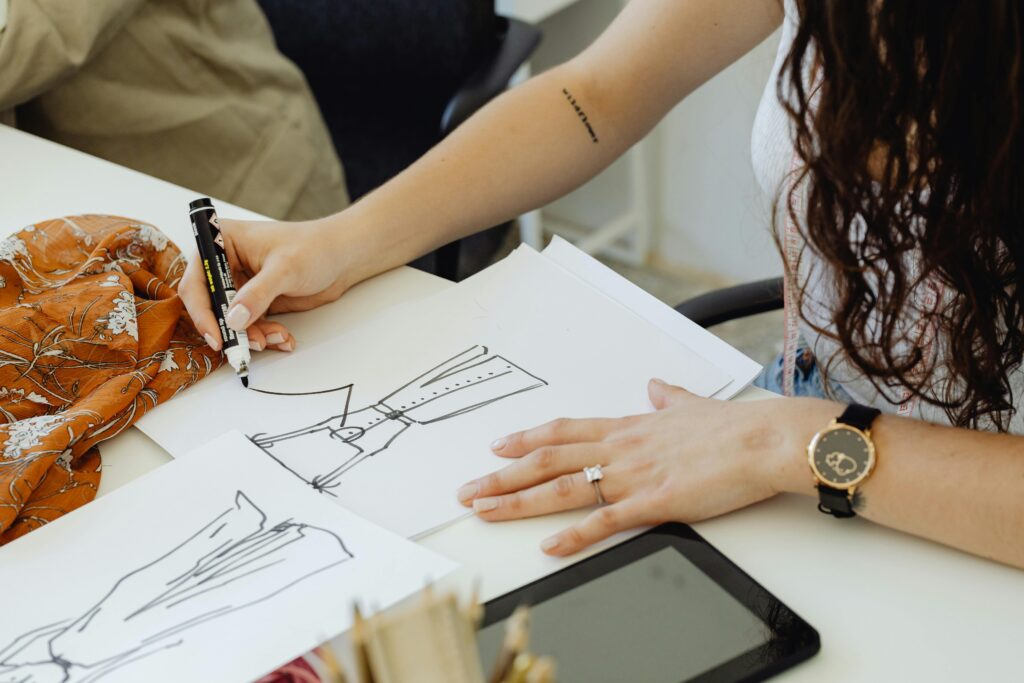
Your portfolio could be the most important document you’ll ever create. Here’s a reality check that should get your attention: on average, it takes about 55 seconds for a hiring manager to evaluate both resume and portfolio and decide if they want to interview a candidate. That’s less than a minute to make your case. And in those precious seconds, your fashion design portfolio needs to tell a compelling story about who you are, what you can create, and why you’re worth betting on.
If you’re a student wondering how to build a fashion design portfolio that actually opens doors, you’ve come to the right place. This guide will walk you through everything from essential components and tech pack creation to digital tools and presentation strategies. Whether you’re applying to fashion school, seeking internships, or preparing for your first industry role, you’ll leave with a complete, actionable roadmap (not just surface level tips) for creating a student fashion portfolio that stands out.
Let’s get into it.
Why Your Fashion Portfolio Matters More Than Your Resume
Here’s the thing: portfolios matter more than resumes or cover letters. Avoid portfolios that only showcase final products. Show your design process (I call it the process portfolio), including mood boards, sketches, CADs, and prototypes.
A resume lists what you’ve studied. A portfolio shows what you can do. And nothing helps you stand out more in today’s competitive fashion job market. For anyone pursuing a fashion design career, understanding this distinction is crucial.
Think about it from the recruiter’s perspective. They’re sifting through dozens, sometimes hundreds, of applications. As a recruiter, the first thing I look at is the portfolio. If it is interesting, I check the CV to see the study background and key experiences. Lastly, I read the cover letter to understand the person’s current situation. If the portfolio is strong enough or interesting, I have a first round of pre-recruiting interviews with the candidates.
Hiring Managers review portfolios to determine if applicants meet the desired requirements such as experience, aesthetics, skills and education background before inviting you for an interview. So it stands to reason, a well-crafted portfolio will create an excellent first impression even before meeting the interviewers in person.
But here’s what many students don’t realize: the work doesn’t need to come from a real job. Recruiters value quality and professionalism over origin. A portfolio that looks like real fashion work shows your competencies and initiative, setting you apart.
That’s incredibly liberating. It means you can start building your portfolio right now, even without professional experience.
Essential Components Every Fashion Design Portfolio Needs
A fashion portfolio guide wouldn’t be complete without breaking down exactly what should go inside. It can include illustrations, fabric swatches, photos, and artwork, but above all, it needs to tell a story. A portfolio is a must, whether you are a designer already in the field or a student who seeks entry into a fashion design school.
Understanding the fundamental principles of fashion design will help you create cohesive, visually compelling portfolio pieces. Let’s break down each essential element.
Let’s break down each essential element.
The Power of a Strong Mood Board
Every great collection starts with inspiration. Your mood board demonstrates your ability to research, curate, and conceptualize before you ever sketch a garment. Client mood and concept boards created in the student’s Introduction to Fashion Design course are often required components for fashion school entry portfolios.
A compelling mood board should include:
- Visual references (photography, art, textures)
- Color palette inspiration
- Fabric and material concepts
- Cultural or thematic references
- A clear point of view
Don’t just slap random images together. Your mood board should tell a story that directly connects to the designs that follow. When reviewers flip from your mood board to your sketches, they should see a clear, logical progression.
Fashion Illustrations vs. Technical Flats (When to Use Each)
Fashion illustrations and technical flats serve distinctly different purposes in the design process, and knowing when to reach for each can streamline your workflow considerably. Fashion illustrations are artistic, expressive renderings that capture the mood, movement, and overall aesthetic of a garment on the body. They’re your go-to when you’re pitching a collection concept to buyers, creating lookbooks for marketing, or presenting a cohesive vision to stakeholders who need to feel the collection rather than dissect its construction. These sketches emphasize silhouette, fabric drape, and styling—they sell the dream. If you’re looking to develop this skill further, consider exploring resources on mastering fashion illustration to refine your technique.
Technical flats, on the other hand, are the blueprint your production team actually needs to bring that dream to life. These are precise, two-dimensional line drawings that show a garment laid flat, front and back, with every seam, stitch, pocket, and closure clearly indicated. Use technical flats when communicating with pattern makers, manufacturers, or anyone involved in sourcing and production. They eliminate ambiguity by providing exact proportions and construction details that an artistic illustration simply can’t convey. In short, illustrations inspire and sell; flats instruct and build. Most professional designers move fluidly between both, using illustrations early in the creative process and transitioning to flats once designs are ready for development.
Documenting Your Design Process (Sketches to Final Product)
Include a maximum of (15) examples of your original design work that demonstrate a breadth of skill. At least one example should show your design process from ideation to execution.
Focus on quality over quantity. We want to see your ability to carry an idea from mood board to final garment.
Your design process documentation should include:
- Initial rough sketches and ideation
- Development drawings showing iterations
- Technical specifications
- Fabric sourcing decisions
- Construction photos (if applicable)
- Final garment photography
Design is problem-solving. Walk us through how you tackled challenges—maybe a tricky drape, a fit issue, or sourcing limitations.
Fabric Swatches and Material Selection
Physical texture matters in fashion, even in a digital portfolio. Black and white sketches work well for fashion illustrations. You might, however, want to include images of fabric swatches or written descriptions of fabrics with some of your sketch work to give reviewers an idea of material choices.
For digital portfolios, photograph your swatches with good lighting and include:
- Fiber content
- Weight and drape characteristics
- Color names and codes
- Supplier information (when relevant)
This demonstrates your understanding of material properties and sourcing capabilities.
Photography That Sells Your Vision
High-quality photos of finished garments (flat lays, mannequins, or models can be used for photos).
Poor photography can destroy an otherwise excellent portfolio. Here are the essentials:
- Use natural or studio lighting
- Photograph garments on forms or models when possible
- Include multiple angles (front, back, detail shots)
- Keep backgrounds clean and consistent
- Show movement when appropriate
If budget is tight, learn basic product photography skills. A well lit smartphone photo beats a poorly lit professional camera shot every time.
Creating Professional Tech Packs (The Industry Secret)
Here’s what separates students who get hired from those who struggle: tech pack proficiency. A Tech Pack, also known as specification sheets, is a set of documents created by designers to explain their design to a manufacturer so that they can turn this information into a finished garment. It serves as a blueprint of a final garment that includes information like detailed flat sketches of the design, materials to be used like trims and labels, measurement specs, size gradings, colorways, etc.
When it comes to outsourcing garment production, most contractors and factories will not take your orders unless you provide a clear and detailed Tech Pack.
Key Tech Pack Components:
|
Component |
Description |
|---|---|
|
Product Summary |
Article name, code, description, season, colorways |
|
Technical Flats |
Front, back, and detail views with callouts |
|
Bill of Materials |
All fabrics, trims, labels, and hardware |
|
Measurement Specs |
Detailed measurements for each size |
|
Construction Details |
Stitching types, seam allowances, finishes |
|
Colorways |
All available color options with codes |
|
Labeling & Packaging |
Care labels, hangtags, packaging instructions |
Clients who came to us with tech-packs were 82% more likely to hit production in 2 rounds of sampling, or less. To put this into context, the average cost of a sample is Rs. 10,000 – Rs. 25,000 depending on the complexity. The average rounds of sampling for a client without a tech-pack was 4.5 and the average for a client with tech-packs was 1.8.
Including tech pack examples in your student fashion portfolio immediately signals industry readiness. The only self-directed part of your portfolio that should be labelled is tech packs: “Tech pack examples are self-directed to avoid sharing proprietary info.” Most brands appreciate this as it shows you will keep their info private as well.
Digital Tools and Software You Need to Master
The fashion industry has gone digital, and your portfolio needs to reflect that. Most important today, your portfolio needs to highlight your ability to use nontraditional skills and digital tools, such as Adobe Illustrator.
Adobe Creative Suite
Adobe Illustrator remains the gold standard for creating detailed fashion sketches and vector-based designs. Its precision allows designers to produce scalable and print-ready illustrations used in everything from apparel to accessories.
Basic skills in Illustrator or Photoshop will serve you well. Photoshop is the most common editing program in the fashion industry. After you scan your image, Photoshop allows you to play with the colors, draw new lines, add text, and crop and collage images together. It’s a powerful tool for endless amounts of creativity.
Essential Adobe skills for fashion students:
- Illustrator: Technical flats, vector illustrations, print design
- Photoshop: Photo editing, mood boards, colorway development
- InDesign: Portfolio layout, presentation documents, lookbooks
For students on a budget, there are excellent free fashion design software options that can help you develop essential skills without the subscription costs.
CLO3D and 3D Design Tools
Clo3D revolutionized the apparel design process by providing designers with a virtual workspace in which garments are easily created, fitted, and visualized without the necessity to produce physical samples with each design change. The software combines accurate fabric physics and intuitive pattern-making tools, which allow designers to see how materials will drape and flow on digital avatars.
Building a digital portfolio with realistic renders and animations showcases expertise to employers or clients. Understanding how AI is transforming the fashion industry can also give you an edge in adopting emerging technologies.
Portfolio Platforms
For hosting your digital fashion portfolio, consider:
- Behance: Industry standard for creative portfolios with built in networking
- Personal Website: Complete control over presentation and branding
- Adobe Portfolio: Integrates with Creative Cloud, easy to build
- Cargo: Clean, design focused templates popular with creatives
Nowadays, having a digital version of your portfolio is very important and it needs to be user-friendly. If you can, go one step further and create a website for yourself where anyone could get to know you and your projects even more in-depth.
Structuring Your Portfolio for Maximum Impact
Your portfolio should only show the best of the best. For a young designer: 3-5 projects should be included in your portfolio. For a more experienced designer: 6-7 of your strongest projects should be included.
Quality Over Quantity
Don’t prepare a hundred-page portfolio! Again there’s no fixed rule here, just common sense. Imagine a jury that needs to go through hundreds and hundreds of portfolios to decide the next generation of emerging talents. Time becomes a serious concern and flipping through huge portfolios makes things worse. We often see young designers fitting into their books EVERYTHING they have about their collection just because they are unable to make a selection. The jury will think you lack the ability to select the strongest elements while still being able to fully communicate your work.
A good starting point is to include 3-5 projects in your portfolio, with 2-4 pages per project. If you’re earlier in your career, 2 may be enough.
The “Start Strong, Finish Strong” Strategy
Organize Your Portfolio: Arrange those designs in the descending order of their strength, meaning the strongest piece at the top.
Reviewers remember what they see first and last. Place your absolute best work at the beginning to hook attention, and close with another strong piece that leaves a lasting impression. The middle can showcase range and process work.
Tailoring for Different Audiences
One of the biggest fashion portfolio mistakes is creating one giant, generic portfolio with a mish mash of different categories and projects, and sending it to every brand. Think about it: Would the same portfolio land you a technical design job at H&M and a fashion design role at Dior? NO way. Footwear brands don’t care that you’ve designed best selling denim collections. Kidswear brands don’t care that you’ve designed evening gowns that showed at NYFW. Menswear brands don’t care that your lingerie brand won awards.
Create variations of your portfolio for:
- Fashion School Applications: Emphasize creative development, research depth, and conceptual thinking
- Brand/Company Applications: Focus on commercial viability and category relevance
- Freelance Clients: Highlight specific skills matching their needs
Building Your Portfolio Through Formal Education
While self-teaching is possible, structured fashion education provides significant advantages for portfolio development. At The Cut Design Academy, our programs are structured so your assignments become portfolio-ready pieces. Whether you’re in Pattern Making Fundamentals, Digital Illustration, or our 3-Year Fashion Diploma, you’ll graduate with a cohesive body of work that reflects your design identity.
A comprehensive Fashion Designing Course provides:
- Structured curriculum that builds skills progressively
- Access to industry standard equipment and software
- Mentorship from experienced professionals
- Real project experience
- Peer collaboration and feedback
For students trying to balance their work along with other commitments, an Online Diploma in Fashion Design offers flexibility while still delivering portfolio building assignments and expert instruction. These programs often include hands on training in essential software like Adobe Illustrator, CLO3D, and portfolio presentation tools. Those with weekend availability might also consider part-time fashion courses designed for working professionals.
Interestingly, skills from related disciplines can strengthen your portfolio. An Interior Designing Course develops spatial awareness, colour theory mastery, and material selection skills that translate directly to fashion design work. Many successful fashions designers’ credit interdisciplinary training for their unique perspectives.
IIFT Bangalore’s project-based curriculum makes sure that the students graduate with complete, professional portfolios ready for industry review, eliminating the scramble to create portfolio pieces after completing education.
Common Portfolio Mistakes That Cost Students Opportunities
Learning what not to do is just as important as knowing what to include. When putting together your portfolio, watch out for these common pitfalls: Too much content: Don’t overwhelm people with too many designs. Stick to your best work. Poor presentation: Blurry photos or messy layouts can ruin the impression you’re trying to make. Keep it neat and professional. Typos and errors: Double-check all text for spelling and grammar mistakes. Little errors can make you look unprofessional. Lack of formatting: Formats must be clear in the presentation for the person to understand them easily.
Major mistakes to avoid:
- Including everything you’ve ever made: Your portfolio is not an archive. Curate ruthlessly. Instead of uploading 50 mediocre sketches, curate your 12 strongest pieces.
- Ignoring your target audience: Sending a couture focused portfolio to a sportswear brand signals you haven’t done your research.
- Poor image quality: Blurry photos, inconsistent lighting, and cluttered backgrounds scream amateur. Invest time in proper photography.
- No process documentation: Showing only final products leaves reviewers guessing about your capabilities. Include your journey from concept to completion.
- Outdated work: If a project is more than 3 to 4 years old and doesn’t represent your current skill level, remove it.
- Missing contact information: It sounds obvious, but many students forget to include clear contact details on every portfolio version.
- Generic presentation: Using default templates without customization suggests a lack of design sensibility. Your portfolio itself is a design project.
- Stealing or copying work: This should go without saying, but never include work that isn’t yours. Industry circles are small, and plagiarism will end your career before it starts.
- Inconsistent branding: Your portfolio should have a cohesive visual identity. Mismatched fonts, colors, and layouts create a disjointed impression.
- Neglecting written context: Brief project descriptions explaining your concept, target market, and design decisions add crucial context that visuals alone can’t communicate.
Developing the essential skills every fashion designer needs will naturally help you avoid many of these common pitfalls.
Digital Portfolio Presentation and Online Presence
In 2025, your online presence is essentially your extended portfolio. It is common to use your social media profiles as your portfolio, as the industry has evolved and companies may not require a traditional portfolio. Instead, they might ask for a link to your Instagram or online portfolio.
Website Best Practices
Your personal website gives you complete control over presentation. Key considerations:
- Fast loading times: Optimize images so pages load quickly
- Mobile responsiveness: Many reviewers will view on phones or tablets
- Simple navigation: Make it easy to find different project categories
- About page: Include a professional bio and photo
- Contact page: Clear ways to reach you
- PDF download option: Allow visitors to download a portable version
Keep your design clean and let your work be the focus. Overly complicated websites distract from the portfolio itself.
Behance Optimization
Behance remains one of the most powerful platforms for creative portfolios. To maximize visibility:
- Use relevant tags and categories for each project
- Write detailed project descriptions
- Post consistently to stay visible in feeds
- Engage with other designers’ work
- Include works in progress to show your process
- Link to your other platforms and website
The platform’s built in community can help your work get discovered by recruiters and brands actively searching for talent.
LinkedIn for Creative Professionals
Don’t overlook LinkedIn as a portfolio tool. Beyond your resume:
- Feature portfolio pieces in the Featured section
- Share project updates and behind the scenes content
- Connect with industry professionals and recruiters
- Join fashion industry groups for networking
- Request recommendations from professors and collaborators
Many fashion recruiters actively search LinkedIn for emerging talent.
Instagram as a Living Portfolio
Instagram has increasingly become a real-time portfolio platform for fashion designers. Best practices include:
- Maintain a cohesive grid aesthetic: Your profile should look intentional at first glance
- Use Stories for process content: Show sketching, draping, and development work
- Leverage Reels for engagement: Short videos of your work gain more visibility
- Write meaningful captions: Explain your design thinking, not just what’s pictured
- Use relevant hashtags: Help recruiters and brands discover your work
- Engage authentically: Comment on and share work from designers you admire
Think of Instagram as your living, breathing portfolio that shows not just what you create, but how you think and engage with the fashion community.
Portfolio Checklist: Your Final Review
Before sending your portfolio anywhere, run through this comprehensive checklist. Consider printing this out and checking off each item.
Content Quality
- Only your strongest 3 to 7 projects included
- At least one project shows full design process
- Technical flats demonstrate accuracy and detail
- High quality photography throughout
- Fabric swatches or material descriptions included
- Tech pack examples (labeled as self directed if applicable)
- Mood boards connect clearly to final designs
- Work is relevant to target audience/company
Presentation
- Consistent visual branding throughout
- Clean, professional layout
- Logical flow from project to project
- Brief, informative project descriptions
- Proper spelling and grammar
- Contact information on every version
- File size optimized for easy sharing
- PDF version available for download
Digital Presence
- Personal website live and functional
- Behance profile updated and optimized
- LinkedIn profile complete with featured work
- Instagram reflects professional aesthetic
- All platforms link to each other
- Portfolio loads quickly on mobile devices
Customization
- Portfolio tailored to specific opportunity
- Irrelevant projects removed for each application
- Cover page or intro customized to recipient
- Research on company/school reflected in selections
Final Checks
- Fresh eyes review (mentor, peer, or professor)
- All links functional
- Files properly named and organized
- Backup copies saved in multiple locations
- Thank you or follow up plan in place
Frequently Asked Questions
How many projects should be in a fashion design portfolio?
For students and early career designers, 3 to 5 projects is ideal. Each project should include 2 to 4 pages showing concept development through final execution. Quality matters far more than quantity. Reviewers prefer seeing 4 exceptional projects over 15 mediocre ones. As you gain experience, you can expand to 6 to 7 projects, but always lead with your strongest work.
Do I need a physical portfolio or just digital?
In 2025, digital portfolios are essential, while physical portfolios are increasingly optional. Most initial screenings happen digitally, so a polished PDF and online presence are non negotiable. However, physical portfolios still have value for in person interviews, especially at luxury brands or for roles involving tactile elements like textile design. If budget allows, maintain both versions.
What file format should I use for my portfolio PDF?
Export your portfolio as a high quality PDF optimized for screen viewing. Keep file size under 10MB for easy email attachment and quick loading. Use RGB color mode for digital viewing. Name your file professionally (FirstName_LastName_Portfolio_2025.pdf). Always test that links within your PDF work correctly before sending.
Can I include work from online courses in my portfolio?
Absolutely. Recruiters value quality and professionalism over where work originated. Projects completed through an Online Diploma in Fashion Design or other accredited programs demonstrate initiative and skill development. Just ensure the work represents your current abilities and meets professional standards. Many hiring managers can’t distinguish between coursework and professional projects when the quality is comparable.
What if I don’t have any “real” fashion experience yet?
This is completely normal for students. Create self directed projects that simulate professional work. Design a capsule collection for a real brand you admire. Create tech packs for garments you’ve designed. Develop a complete collection with mood boards, illustrations, flats, and photography. Volunteer for student fashion shows or collaborate with photography students. Exploring different fashion design categories can help you identify which specialization to focus your portfolio projects on. Structured programs like IIFT Bangalore’s Diploma in Fashion Designing build portfolio ready projects directly into the curriculum.
Should I include sketches or only finished work?
Include both, strategically. Sketches demonstrate your ideation process and hand skills, which many employers still value. However, balance rough sketches with polished technical flats and finished work. At least one project should show the complete journey from initial sketch to final product. Avoid including practice sketches or early learning work that doesn’t represent your current skill level.
How often should I update my portfolio?
Review your portfolio every 3 to 6 months and after completing any significant project. Remove older work that no longer represents your abilities. Add new projects that demonstrate growth or new skills. Before any specific application, customize your portfolio selection for that opportunity. Think of your portfolio as a living document that evolves with your career.
What education path should I take to build a strong portfolio?
For recent high school graduates, exploring fashion designing courses after 12th provides a clear roadmap for entering the industry with proper training. Formal education offers structured portfolio development, mentorship, and access to industry standard tools that self teaching often lacks. Whether you choose full time study or flexible online options, prioritize programs that emphasize hands on projects over pure theory.
Taking the Next Step
Building a standout fashion design portfolio takes time, intentionality, and continuous refinement. But the investment pays dividends throughout your career. Your portfolio is more than a collection of pretty pictures. It’s your professional identity, your visual resume, and often your first conversation with potential employers or schools.
Start with what you have. Curate ruthlessly. Document your process. Master the digital tools. Present professionally. And never stop improving.
The fashion industry rewards those who can demonstrate both creative vision and technical execution. Your portfolio is where you prove you have both. Some designers even leverage their portfolio as a launching pad for fashion entrepreneurship, using their documented work to attract investors and clients for their own brands.
Ready to build a portfolio that opens doors? IIFT Bangalore’s project based curriculum ensures you graduate with professional, industry ready work. Whether you choose the comprehensive Diploma in Fashion Designing for immersive, hands on training or the flexible Online Diploma in Fashion Design that fits your schedule, you’ll develop the skills, software proficiency, and polished portfolio pieces that set you apart in the competitive fashion industry.
Your portfolio journey starts with a single project. Make it count.