

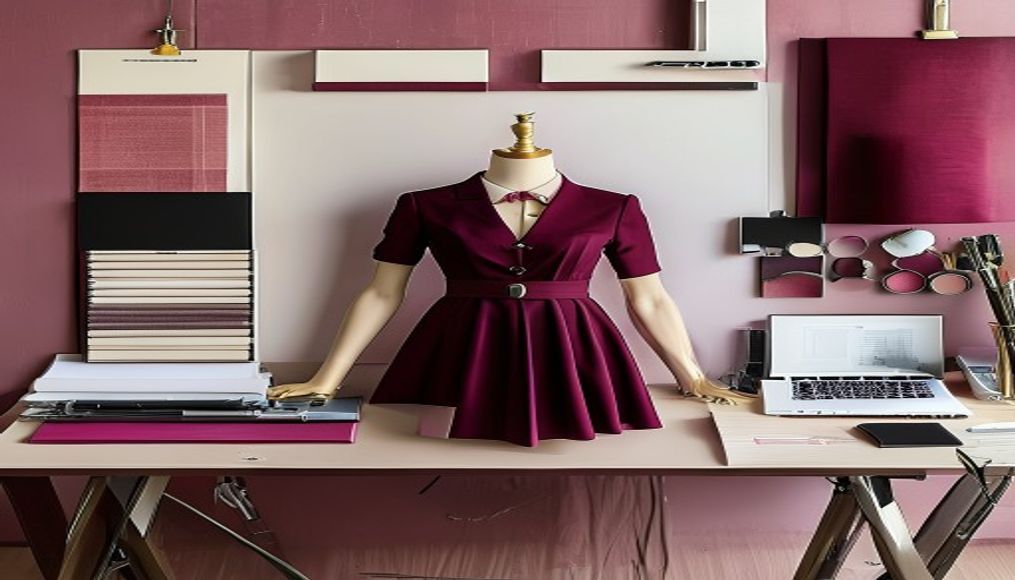
Quick answer: Fashion designing jobs for freshers extend beyond the single title of junior designer. Entry points can include design assistance, sampling, product development, technical drawing, merchandising support, production coordination, styling and visual communication. The strongest first role is one that matches your current evidence and builds the next set of skills. This guide helps you understand responsibilities, prepare a portfolio and apply with realistic expectations.
What freshers should understand about fashion design jobs
People searching for fashion designing jobs for freshers usually need more than a definition or a list of attractive outcomes. They need to understand the work involved, the evidence that proves quality, the trade-offs between options and the checks required before committing time, money or a portfolio claim.
What fashion designing jobs for freshers includes
Freshers are rarely hired for taste alone. Employers need evidence that a candidate can understand a brief, produce the required output, accept corrections and hand work to the next person accurately. The same fashion education can lead to creative, technical, product, retail or communication roles, so the first task is to map each job description to portfolio proof rather than applying under one broad label.
How to evaluate fashion designing jobs for freshers decisions
Use the guide as a decision sequence rather than a list of ideas. Begin with the purpose of fashion designing jobs for freshers, compare the available options, test the technical or practical requirements, and document why one choice is more suitable than another. The tables provide a quick orientation; the subsections that follow explain what to inspect, what evidence to retain and which mistakes create avoidable rework.
| Entry role | Typical contribution | Evidence that helps |
|---|---|---|
| Design assistant | Research, flats, boards and sample coordination | Relevant design process projects |
| Sampling assistant | Patterns, construction follow-up and fittings | Samples and garment details |
| Product development assistant | Specifications, materials and trackers | Technical documents and organisation |
| Merchandising assistant | Orders, timelines and communication | Spreadsheets and commercial understanding |
| Styling assistant | Look preparation and shoot coordination | Styled stories and reliable execution |
| Entry role | Typical first responsibilities | Evidence to show |
|---|---|---|
| Assistant designer | Research, boards, colourways and range support | One resolved collection process |
| CAD or fashion illustrator | Flats, artwork, layouts and revisions | Accurate digital files plus drawing range |
| Sampling or product assistant | Measurements, materials, sample tracking and comments | Construction, tech-pack and fit evidence |
| Merchandising assistant | Data, timelines, product information and coordination | Organised range, costing or tracking project |
| Visual or styling assistant | Displays, product stories and execution support | Before-plan-after case study |
How to compare fashion designing jobs for freshers options
Do not treat the tables as a universal ranking. Compare assistant designer, cad or fashion illustrator, sampling or product assistant, merchandising assistant against the actual brief, user, place, role or production condition. For each row, write down the evidence available, the assumption being made, the risk if that assumption is wrong and the person who can confirm it. An option becomes stronger when it solves the defined need with fewer unresolved conflicts; it does not become stronger because its label sounds more advanced or visually impressive.
What fashion designing jobs for freshers evidence to record
Create a small decision record for fashion designing jobs for freshers before producing the final output. At minimum, make space for two clearly chosen role families, keyword-aligned but natural résumé, relevant work on the first portfolio pages, accurate individual contribution, technical files checked, along with dates, file or sample versions and review comments. Decide what can be verified immediately and what must remain provisional. This record makes feedback specific, prevents an outdated instruction from returning later and helps a student explain not only what was made, but how the result improved through observation, testing and correction.
Select roles and align the portfolio
Match job titles to actual tasks
Two organisations may use the same title for different work. Read the responsibilities, tools and reporting line carefully. A design-assistant role may be research-heavy in one team and sample-heavy in another. Build your application around the tasks rather than relying on the title or assuming every opening offers the same creative freedom.
Create a portfolio for the role
Lead with projects that reflect the advertised work. For design, show research through resolved garments. For product development, add flats, specifications, measurements or sample corrections. For styling, show a clear story, sourcing logic and credits. Remove work that distracts from the application and keep captions concise.
Treat technical and organisational skills as design strengths
Freshers are often trusted first with defined tasks. File management, accurate measurements, meeting notes, trackers, follow-up and version control make creative work possible. Demonstrating reliability can earn access to more complex briefs. Include examples of how you planned a collection, corrected a pattern or coordinated a group project.
Prepare for applications, tests and first-job learning
Prepare for practical tests
An interview may include a drawing task, trend interpretation, flat sketch, fabric suggestion, mood board, styling exercise or spreadsheet check. Practise under a time limit and explain assumptions. Employers are usually assessing thought process, accuracy and response to feedback in addition to the final visual result.
Evaluate the first role for learning
Ask who will review your work, what you will handle during the first months and whether the team covers design, sampling, production or retail. Consider commute, schedule, pay, employment terms and safety alongside the role. A famous-sounding title with repetitive duties may teach less than a modest title with structured exposure.
Build evidence during the first year
Maintain a confidential work log, update your skill list and request feedback at sensible intervals. Record outcomes that can later become résumé bullets without revealing company information. The goal of the first year is not only to hold a title; it is to improve judgement, speed, accuracy, communication and ownership.
Turn job descriptions into evidence and a search system
Translate a job description into an evidence matrix
Copy each responsibility into a table and add the tool, output and project that proves it. ‘Support collection development’ might map to research, range plan, flats and fabric reasoning. ‘Coordinate samples’ needs version tracking, measurements and communication—not another mood board. Mark requirements you can demonstrate, skills you are learning and claims you cannot yet make. Use this matrix to select résumé bullets, portfolio pages and interview examples.
Build a fresher portfolio that shows handoffs
Include a concise brief, process, alternatives, technical or material evidence, resolved outcome and your individual contribution. Show files another team member could use: a readable flat, measurement sheet, pattern, sample comment, range plan or display plan. Add captions that explain the decision and result without overstating commercial impact. A hiring reviewer should understand what you can do within minutes, so remove duplicated pages and decorative spreads that hide weak evidence.
Prepare for practical tests and interviews
A test may ask for research, colourways, a flat, a small range, styling proposal or sample analysis under time pressure. Confirm the brief, deadline, format and permitted references. State assumptions, keep layers and files organised, and submit only what was requested. In an interview, explain one correction that improved your work and one decision you would revisit. This demonstrates learning ability more credibly than describing yourself only as creative or passionate.
Use a 90-day job-search system
Choose two adjacent role families, create a tailored résumé and portfolio version for each, and track applications in a sheet. Record company, role, source, date, contact, evidence sent, response and next action. Schedule weekly skill practice based on repeated gaps. Ask faculty, alumni and internship supervisors for specific portfolio feedback rather than generic referrals. Review current roles on legitimate job portals and the employer’s own site, and never pay to apply or share sensitive identity documents before verifying the organisation.
When working on fashion designing jobs for freshers, decisions that depend on changing safety, workplace, regulatory or professional requirements should be checked against the current project conditions and relevant guidance. Useful verification points include National Career Service job-search portal and National Qualification Register fashion designer role. These references support a specific decision; they do not replace measurements, approvals, manufacturer instructions or qualified professional advice.
Write stronger applications and assess learning quality
Write evidence-led résumé bullets
Replace personality claims with a task, output and context that you can explain. For example, state that you developed a small range from a defined user brief, produced front-and-back flats and corrected one sample after fit review. Do not claim leadership, revenue or production scale that the project did not involve. Add tools only when a project demonstrates them. Keep the résumé readable and align terminology with the vacancy without copying entire sentences. A reviewer should be able to move from each important bullet to a portfolio page, file or interview story.
Evaluate the first job for learning quality
Compare the role’s reporting line, actual tasks, product category, team handoffs, feedback, tools, location, hours, probation, compensation structure and growth path. A broad title can conceal data entry, sales or production coordination, while a modest assistant title may provide strong design development. Ask how success is measured in the first three months and what files or samples you will own. Review the complete written offer and verify the employer before sharing sensitive information. The best first step builds transferable evidence, not merely a title that sounds creative.
Worked example: one project, three job applications
fashion designing jobs for freshers scenario and decision
A final collection project can be reframed honestly. For an assistant-designer role, lead with user research, range logic and colourways. For product development, lead with fabric, flats, measurement specifications and fit corrections. For merchandising, lead with assortment, timeline, costing assumptions and coordination documents. The candidate is not inventing experience; they are helping each reviewer find the evidence relevant to the vacancy.
fashion designing jobs for freshers evidence to retain
Review the fashion designing jobs for freshers work against evidence rather than presentation alone. A second reviewer should be able to locate evidence for two clearly chosen role families, keyword-aligned but natural résumé, relevant work on the first portfolio pages, accurate individual contribution; follow the current version; and identify what changed after testing or feedback. Record assumptions that still need confirmation and name the person responsible for resolving each one. This prevents a polished page or render from concealing an incomplete technical, operational or learning decision.
A step-by-step fashion designing jobs for freshers workflow
Complete the stages in order, but return to an earlier stage whenever new evidence changes the brief. Keep one current version of the decision record so that sketches, drawings, files, samples or approvals do not drift apart.
- Select two role families: Focus your search on positions supported by your strongest projects and skills.
- Tailor the application: Adjust the portfolio order and résumé summary to match each job description.
- Practise tasks: Complete timed flats, boards, specifications or styling plans relevant to the role.
- Track applications: Record dates, contacts, follow-ups, interview stages and learning.
- Review offers: Compare written terms, work content, supervision, travel and growth—not title alone.
At every handoff, state what is approved, what remains provisional and what must be checked next. This small discipline makes the workflow easier to review and converts activity into evidence that can be discussed in a portfolio, interview or project meeting.
Review job-readiness evidence before applying
fashion designing jobs for freshers quality-control checklist
- Two clearly chosen role families
- Keyword-aligned but natural résumé
- Relevant work on the first portfolio pages
- Accurate individual contribution
- Technical files checked
- Application tracker
- Interview stories about decisions and corrections
- No payment for job access
fashion designing jobs for freshers mistakes and their consequences
- Applying to every fashion opening with the same portfolio order.
- Listing software without showing what was produced with it.
- Ignoring production, merchandising and coordination roles that can build useful industry knowledge.
- Using unverified salary promises to judge an entry role.
- Sharing confidential professional work publicly to make the portfolio look larger.
fashion designing jobs for freshers final independent review
Review the fashion designing jobs for freshers work against evidence rather than presentation alone. A second reviewer should be able to locate evidence for relevant work on the first portfolio pages, accurate individual contribution, technical files checked, application tracker; follow the current version; and identify what changed after testing or feedback. Record assumptions that still need confirmation and name the person responsible for resolving each one. This prevents a polished page or render from concealing an incomplete technical, operational or learning decision.
Build related fashion career skills at IIFT Bangalore
Related skills for fashion designing jobs for freshers
See how entry roles connect with broader career directions. For the next step, use scope of fashion designing in India.
Review pay ranges with the factors that influence them. The guide on fashion designer salary in India helps you examine that part in depth.
Organise evidence for a focused application. Continue with student fashion portfolio guide when that becomes the next decision.
Identify strengths to demonstrate and gaps to practise. For the next step, use skills needed by fashion designers.
Build digital fluency through practical outputs. The guide on free fashion designing software helps you examine that part in depth.
Understand how different education routes support entry into work. Continue with fashion degree versus diploma when that becomes the next decision.
Use supervised experience to strengthen role-specific proof. The related guide helps readers prepare internship evidence before applying for fresher roles.
Structured learning for fashion designing jobs for freshers
Readers who want guided studio practice can compare IIFT Bangalore learning options for fashion designing jobs for freshers. Programme structure and eligibility can change, so ask IIFT Bangalore about current fashion designing jobs for freshers programme details before making an admission decision.
Questions about fashion designing jobs for freshers
What is the best fashion job for a fresher?
The best role matches the evidence in your portfolio, provides responsible supervision and adds skills you want to develop.
Can I get a fashion job without experience?
Academic projects, self-directed briefs, internships and documented practical work can provide evidence for entry-level applications.
What should a fresher fashion résumé include?
Include relevant education, projects, internships, tools, responsibilities, outcomes and a working portfolio link. Keep unrelated details brief.
Do fashion jobs require software skills?
Many roles benefit from digital drawing, image editing, layouts or spreadsheets, but requirements vary. Show role-relevant outputs rather than a list of tools.
Can a fresher apply without an internship?
Yes, but the portfolio must provide credible academic or self-initiated evidence of the tasks the role requires.
Should I use the same portfolio for every job?
Keep one master portfolio and create shorter role-specific versions by changing selection, order and captions.
How many roles should I target at once?
Start with one or two adjacent role families so practice and applications remain focused, then expand when your evidence supports it.





Discussion